



Seller Concessions in the RGV: When Credits Beat Price Cuts
Hey, it's Eric.
If you are selling a home in the Rio Grande Valley, you have probably heard the term seller concessions floating around. Most sellers hear it and think it means giving money away. In my experience, seller concessions are often the smartest move you can make, especially when the alternative is a big price cut.
A seller concession is simply a credit you give the buyer at closing. Instead of lowering your price, you agree to cover part of the buyer's closing costs, buy down their interest rate, or credit them for repairs. The buyer still pays your listed price. You just hand back a portion of the proceeds to make the deal work.
Why does that matter? Because your final sales price is what shows up in the county records and what appraisers use. Your neighbors' future appraisals are built on sold prices, not on who paid whose closing costs. In my experience, keeping your price intact while offering a concession protects your bottom line better than a straight price drop.
What Seller Concessions Look Like in the Valley
Say your home is listed at 230,000 dollars in Pharr and a buyer offers full price but asks for 6,000 dollars in seller concessions toward their closing costs. Your net is 224,000 dollars before your own selling costs. The home still records as selling for 230,000, which matters for future appraisals in the neighborhood.
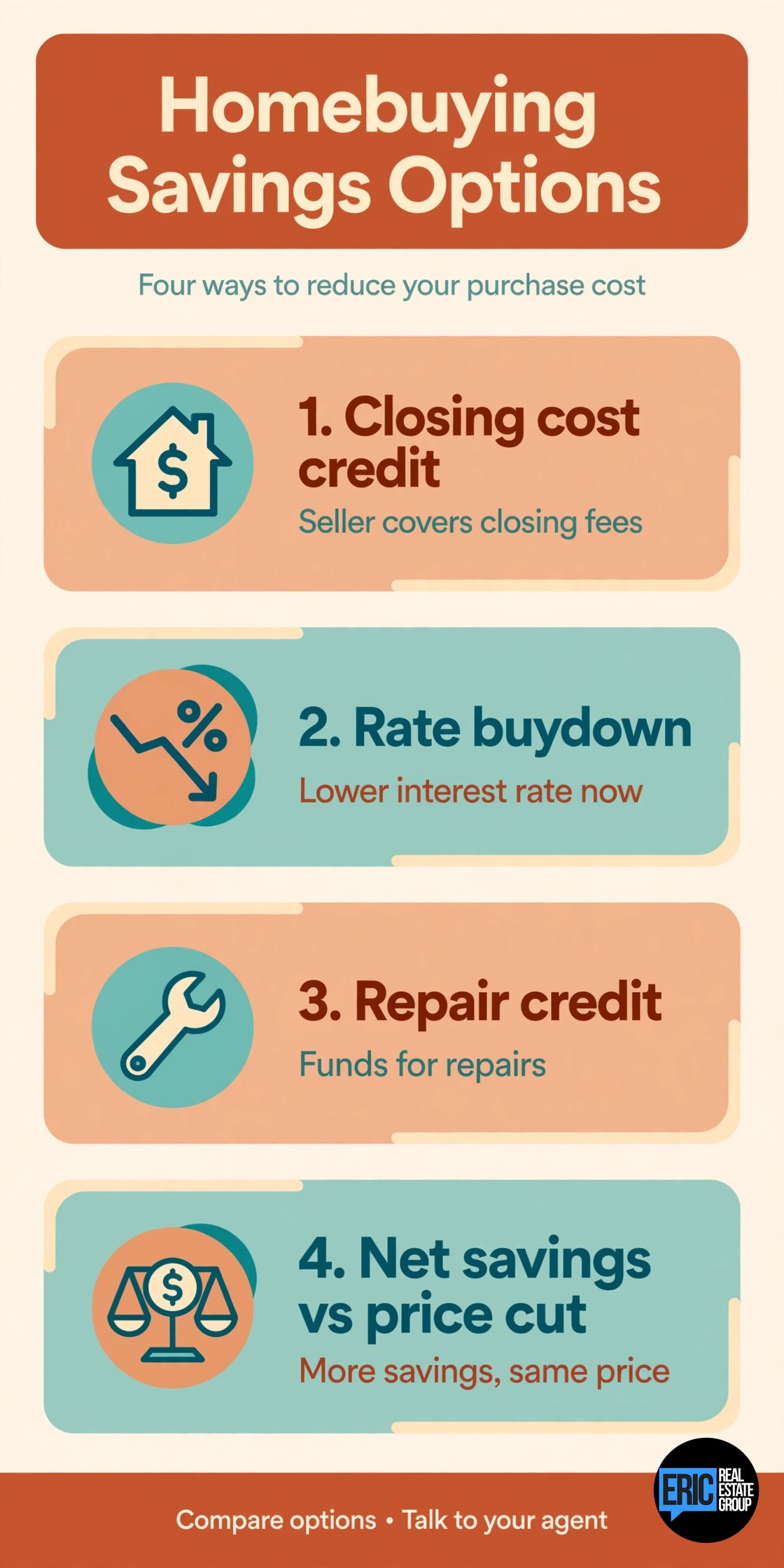
Concessions can take a few common forms here in the Valley:
- A credit toward the buyer's closing costs, like title fees, prepaid taxes, and insurance
- A temporary interest rate buydown, where you fund a lower rate for the buyer's first year or two
- A repair credit, when the inspection turns up something like an aging roof or old AC unit
When Seller Concessions Beat Price Cuts
Not every situation calls for a concession. Here is when I tell my sellers in McAllen, Edinburg, Mission, Weslaco, and San Juan to think credits instead of cuts.
First, when the buyer is short on cash. A lot of Valley buyers can afford the monthly payment but are stretched thin on the cash needed to close. A 5,000 dollar concession can cost you less than a 10,000 dollar price reduction, because it keeps the appraisal value higher and gets the buyer to the table.
Second, when your home is priced near the top of the neighborhood range. Dropping the price can start a slide where buyers wonder what is wrong with the house. Offering a concession lets you hold your position while still giving the buyer a reason to say yes.
Third, when the inspection brings surprises. Older Valley homes often have inspection issues: AC systems working hard in our summers, roofs with a few years left, older electrical panels. A repair credit lets the buyer choose their own contractor after closing instead of you scrambling to fix things on a deadline.
Fourth, when days on market are climbing. If your listing has been sitting and showings are slowing, a concession is a fresh signal to buyers without the stigma of a price cut. Buyers and their agents notice when a listing says seller concessions offered.
How Seller Concessions Work on the Texas Contract
On the standard Texas contract, concessions are written in as a specific dollar amount or percentage of the sales price. The title company then applies that credit on the settlement statement at closing. It is clean, it is documented, and both sides know exactly where the money goes.
One thing to know: every loan type has a cap on how much a seller can contribute. Your buyer's lender sets that limit, and it is part of why having a good lender in the loop early matters. A good listing agent catches that before it becomes a problem, not after.
This is also why I tell sellers not to fear concessions. The structure is standardized, the title company handles the math, and the credit goes straight to real costs the buyer has to pay anyway.
The Math That Changes Minds
Here is a simple hypothetical. Your home is listed at 250,000 dollars in Mission. Path one: drop the price to 240,000. Your net drops by the full 10,000, and the home records at 240,000. Path two: hold the price at 250,000 and offer a 7,000 dollar concession toward the buyer's closing costs and a rate buydown. Your net is roughly the same, give or take, but the home records at 250,000. The buyer's monthly payment drops thanks to the buydown, which can matter more to them than a price cut would.
In my experience, path two often wins. The buyer feels helped on the costs that hurt them most, and you protect the value of your sale.
When a Price Cut Is Actually Better
I will be straight with you. Concessions are not always the answer. If your home is genuinely overpriced for the neighborhood, no concession fixes that. Buyers in Weslaco and San Juan compare your list price to the last three similar sales, and if you are way above them, you need a price correction, not a credit.
Also, if the appraisal comes in low, a concession does not raise the appraised value. That is a different negotiation entirely, and it usually means the price has to come down to meet the appraisal or the buyer brings extra cash.
The rule of thumb I use: if the price is right but the buyer needs help with cash to close, offer a concession. If the price itself is the problem, cut the price.
How to Offer Concessions Without Looking Desperate
Listing "seller desperate, will pay all closing costs" in your remarks is the wrong way. It tells every buyer to lowball you. The right way is strategic: advertise that concessions are negotiable, let your agent present them as part of a strong counteroffer, and tie the concession to the buyer's actual needs. A concession offered in response to a real offer looks like smart negotiating.
This is also where having an agent who negotiates every day matters. The wording, the timing, and the amount all change the outcome. In my experience, the sellers who plan their concession strategy before the offer comes in do better than the ones who panic after one.
The Bottom Line for RGV Sellers
Seller concessions are one of the most underused tools in Valley real estate. They keep your recorded price strong, help cash tight buyers close, and often cost you less than the price cut you were about to make. Used the right way, they are not a giveaway. They are leverage.
If you are thinking about selling in McAllen, Edinburg, Mission, Pharr, Weslaco, or San Juan, let us talk through your numbers before you list. The right strategy depends on your home, your timeline, and your neighborhood, and I would rather plan it with you now than fix it later.
Looking to buy or sell in the Rio Grande Valley?
Eric Jimenez | Eric Real Estate Group, LLC | 956-292-4500 | eric@bettercalleric.com | bettercalleric.com
Better Call Eric. Listings that sell.