


Hey, it's Eric.
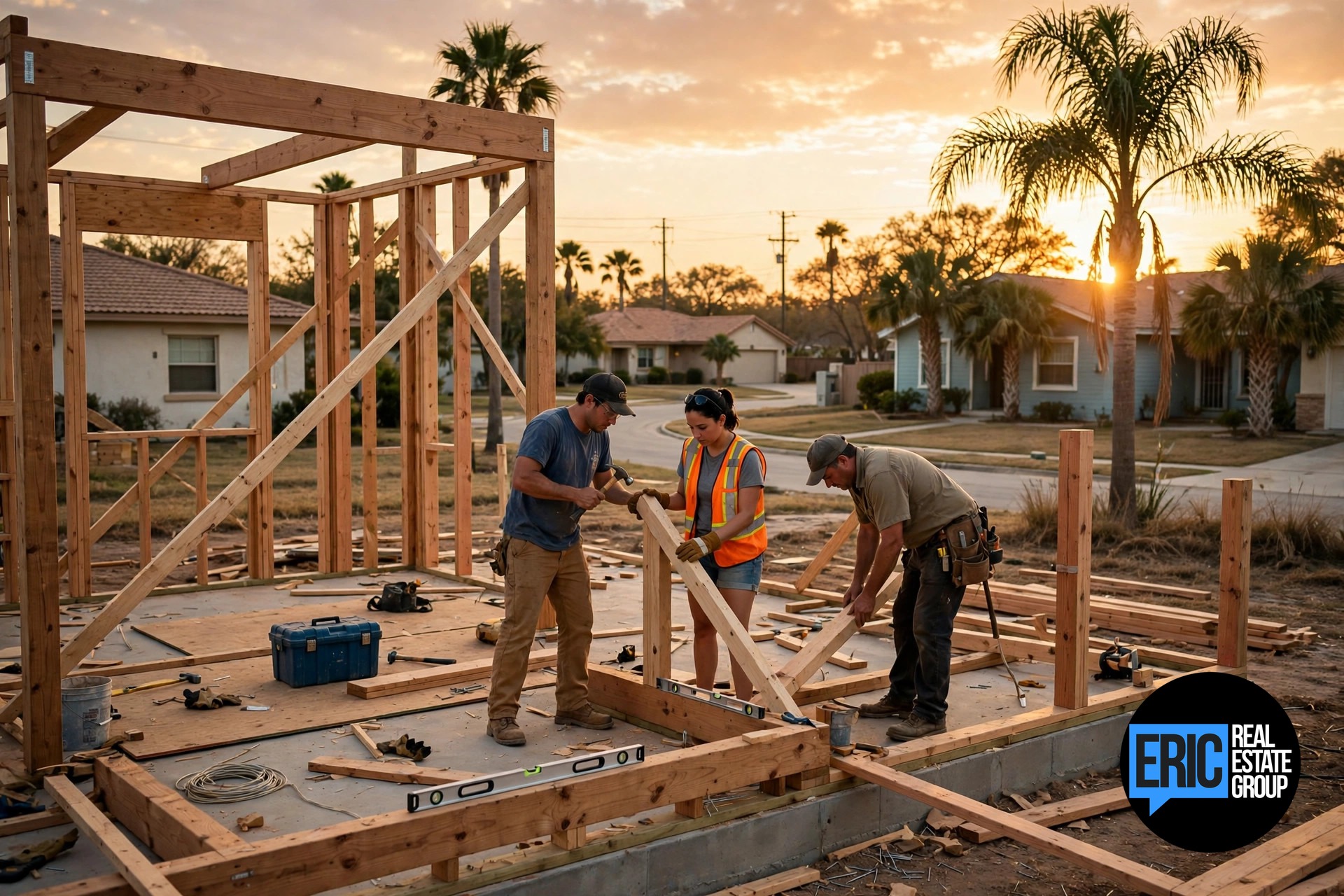
If you drive around Harlingen, Weslaco, or the north side of McAllen lately, you may have noticed something strange. Brand new neighborhoods with streets and concrete slabs in place, but hardly any crews working on them. Half framed houses sitting quiet in the middle of a weekday. That is not a slow week. Something real is happening with new construction in the Rio Grande Valley, and if you own a home here, it affects you directly.
On October 1, Marketplace reported that immigration enforcement is thinning construction crews across South Texas and delaying projects in markets like the Rio Grande Valley. A Harlingen area builder, Ronnie Cavazos of The Structure Team, told them his framing crews are running at a fraction of their normal size. He said he works down a list of 30 framers just to find one willing to take the job, and that a phase of homes that should take 12 months is now looking like 18.
That is one builder's story, but the pattern behind it is Valley wide. A recent Commercial Observer Texas report put residential construction in Hidalgo County down about 30 percent in recent months. A Mission concrete supplier saw usage plunge 60 percent and ended up filing for Chapter 11. A longtime tile supplier reported more than five million dollars in lost sales tied to stalled projects. Meanwhile Hidalgo County keeps growing. The same reporting puts the county at roughly 915,000 residents, growing at about double the national pace since 2020. Fewer new homes getting built, more people moving in. You can do that math yourself.
So what does this mean for you, sitting in a house in McAllen, Edinburg, Mission, Pharr, Weslaco, or San Juan, wondering what your home is worth right now? Let me break it down the way I explain it to sellers at the kitchen table.
What Is Really Happening on Valley Job Sites
The core problem is labor, and it is not a small one. The American Immigration Council estimates that roughly a quarter of the Texas construction labor force is undocumented. In the Valley, builders say the real share on local crews is even higher. When ICE enforcement intensified, crews got picked up at job sites. Others stopped showing up out of fear, including some workers who have legal status and simply do not want to risk being in the wrong place.
The result is what builders are calling ghost town job sites. Framing crews that used to run eight to ten guys are down to a skeleton crew. Concrete pours go unfinished when a foundation crew disappears midday. Projects stretch months past schedule. Costs climb because the few available workers can charge more, and builders are eating higher financing costs on loans that sit open longer.
In my experience, a delayed new build neighborhood changes the feel of a whole area. Buyers who drove out to look at a shiny new subdivision find half finished streets and no completion date. Some of them keep driving, and they end up looking at resale homes instead.
Why Less New Supply Changes the Game for Resale Sellers
Here is the part that matters to you. New construction is your direct competition when you sell. When a buyer can choose between your ten year old home in Edinburg and a brand new build down the road for a similar monthly payment, that new build wins a lot of the time. It has the warranty, the modern floor plan, the untouched everything.
Right now, that competition is shrinking. Builders cannot deliver homes on schedule, and in some subdivisions they cannot deliver them at all. Buyers who wanted new are getting tired of waiting on completion dates that keep moving. Those buyers do not disappear. They shift into the resale market, and that is your market.
This does not mean your home magically gains value overnight. Markets do not work that way, and I will not tell you they do. What it means is that the supply side of the equation is tightening at the same time demand keeps growing. In my experience, that is the setup where well priced resale homes move faster and sellers keep more leverage at the negotiating table. Fewer bidding wars against builders. Fewer buyers telling you they will just go buy new instead.
Local officials are already warning that prolonged disruption could push home prices up and tighten credit. I am not going to predict prices for you. But the direction of the pressure is worth paying attention to if you have been on the fence about selling.
If You Are Thinking "Sell My House McAllen," Here Is the Play
If you have typed "sell my house McAllen" into Google lately, you are not alone, and this market moment gives you a real window. Here is how I would play it.
First, get a real valuation, not a guess. Online estimators lag in a shifting market, and this market is shifting. A local realtor runs actual comparable sales from your neighborhood, not county wide averages. That is the number everything else depends on.
Second, price for this moment, not last year's headlines. The tighter supply helps you, but overpricing still kills momentum. The homes that sell fastest in the Valley right now are priced to create competition in the first two weeks, not priced to "test the market" for two months.
Third, do not over improve. With new builds delayed, buyers are more flexible on finishes than they were when shiny new inventory was everywhere. In my experience, clean, repaired, and well presented beats renovated and overpriced almost every time in this market. Fix what is broken, paint what is tired, and stop there unless your realtor tells you otherwise.
Fourth, presentation is doing heavier lifting than usual. When your competition is a half built subdivision, a home that shows beautifully on day one stands out even more. Professional photos are not optional. They are the difference between a buyer stopping on your listing or scrolling past it.
Fifth, move before the builders recover. Labor markets adjust. Crews come back, projects restart, and new inventory eventually hits. The sellers who benefit most from a supply squeeze are the ones who list while the squeeze is on, not after it eases.
What to Watch Before You List
A few honest cautions, because I would rather you hear them from me than learn them the hard way.
Watch mortgage rates. They still decide what most buyers can afford, and they matter more than any supply story. A great supply setup with punishing rates is still a tough market.
Watch new build permits in your specific area. The Valley is big. The stall is hitting some subdivisions harder than others. If three new communities near your neighborhood are back to full crews, your window looks different than if they are still quiet.
Watch your own timeline. Selling into a strong moment only helps if your next move is planned. If you need to buy after you sell, talk through the timing with your realtor before you list. In a tight market, sellers who become buyers need a plan for where they land.
And ignore anyone who promises you a specific price or a specific number of days on market. Nobody can verify that in advance, me included. What I can tell you is that the conditions favor prepared sellers right now, and prepared beats lucky every time.
The Bottom Line
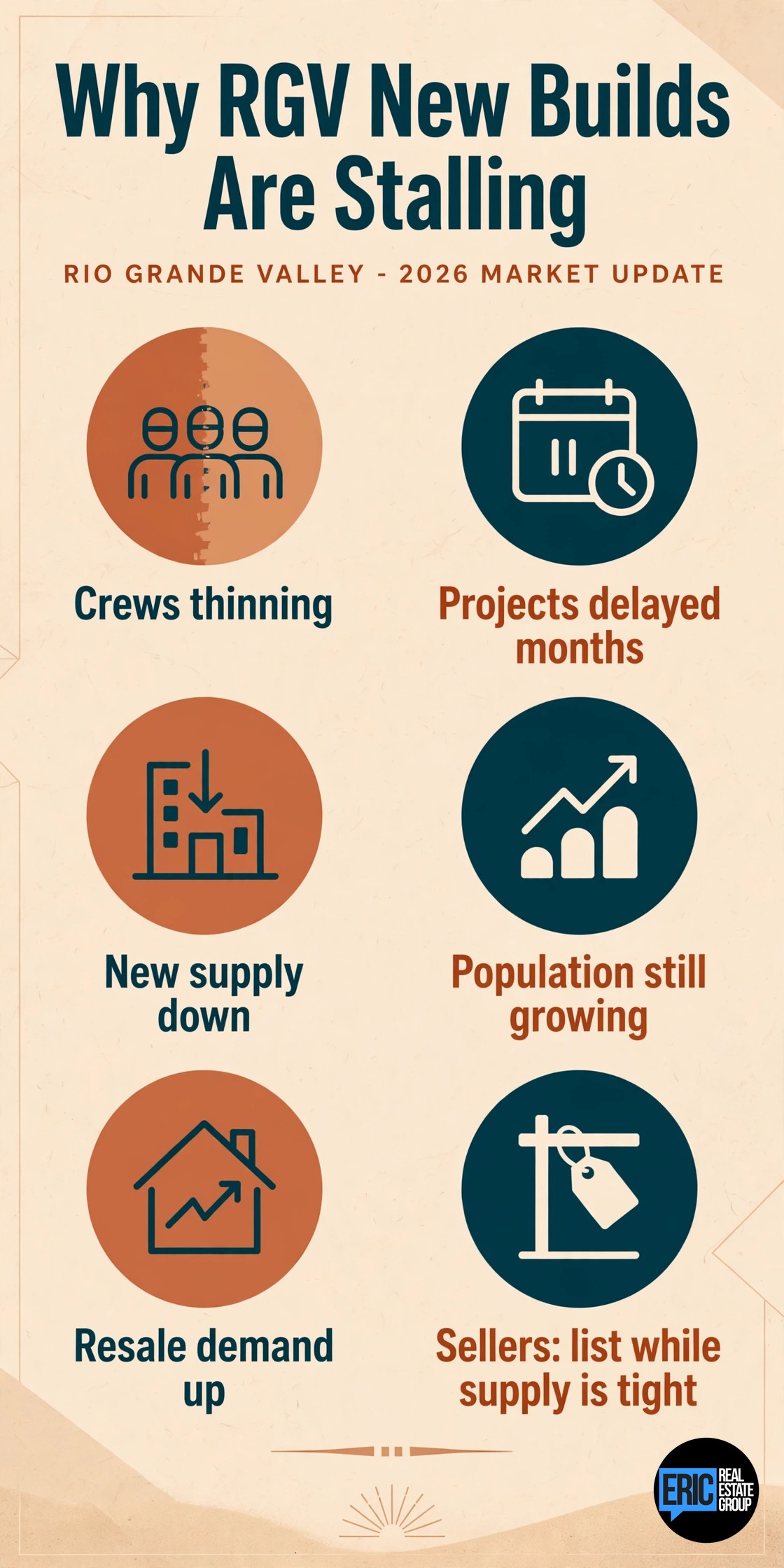
The Valley's new build engine is sputtering. Crews are thin, projects are months behind, and the pipeline of new homes is shrinking while the population keeps growing. For resale sellers in McAllen, Edinburg, Mission, Pharr, Weslaco, and San Juan, that is about as friendly a setup as you get.
Windows like this do not stay open forever. If you have been thinking about selling, this is the time to get your numbers, get your home ready, and get a plan. Not because of hype, but because supply and demand are doing the quiet work in your favor right now.
Looking to buy or sell in the Rio Grande Valley?
Eric Jimenez | Eric Real Estate Group, LLC | 956-292-4500 | eric@bettercalleric.com | bettercalleric.com
Better Call Eric. Listings that sell.