



Hey, it's Eric.
If you want to sell my house in McAllen, seller disclosure in Texas is one of the first forms you need to take seriously. It is not just paperwork you rush through the night before listing. It is a written statement to the buyer about what you know about your home, and getting it wrong can cost you the sale, or create a much bigger problem after closing.
I work with sellers in McAllen, Edinburg, Mission, Pharr, Weslaco, and San Juan. In my experience, the sellers who do best are honest early and put what they know in writing. This guide explains what it covers, how to fill it out carefully, and what can happen if you leave something out. This is general information, not legal advice. If your situation is complicated, talk to your title company or a Texas real estate attorney.
What seller disclosure in Texas actually means
Most sellers of a single family home in Texas must give the buyer a Seller's Disclosure Notice. It is a standard form that asks about the condition of the property as you know it. You are generally reporting your actual knowledge, not promising the home is perfect.
The form covers a lot of ground, including:
- Roof, foundation, walls, floors, and other structural parts
- Plumbing, electrical, heating, and air conditioning systems
- Water, sewer, and septic details where they apply
- Flooding, drainage problems, or water penetration you know about
- Environmental items, lead based paint for older homes, and other hazards listed on the form
- Termites or other wood destroying insects you know about
- Past repairs, insurance claims, and known defects
- Whether the home is in a floodplain or has other land and survey issues you know about
In South Texas, buyers pay close attention to roof condition, air conditioning, drainage, and flood history. A roof leak you repaired in Edinburg matters, even if the repair worked. You do not have to hire an inspector to complete the form, and you do not have to disclose something you truly do not know. But you do have to answer honestly based on what you do know.
How to fill out the disclosure the right way
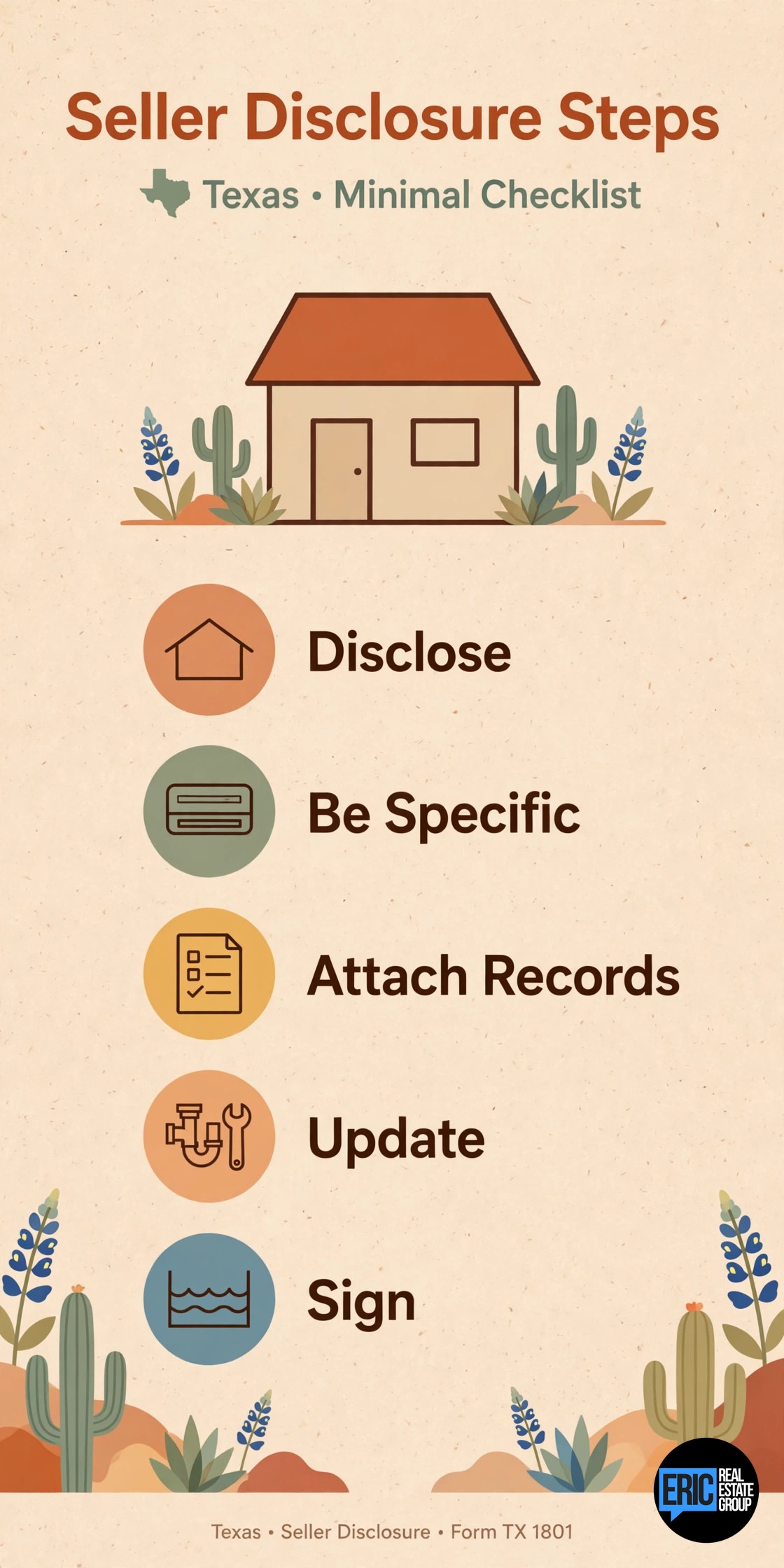
Start early, before photos and before the first showing. Walk through your home room by room and system by system, and be specific.
A few habits that help:
- List when a system was repaired or replaced, if you know the date, and say who did the work if you have records
- Attach invoices, permits, or warranty papers when you have them
- Write "repaired" only if it was actually repaired, and note if the problem ever came back
- If you are unsure about an answer, say so on the form instead of guessing
- Do not leave sections blank without a reason
This is also where a pre listing walk through helps. I talk through that choice in The Pre Listing Inspection: Smart Move or Waste of Money?. An inspection you choose to do before listing can surface items you forgot, so your disclosure is cleaner and your pricing is more realistic.
If you are debating whether to fix an item or sell as it is, be clear either way. A disclosed problem with a credit plan or a repair record is usually easier for a buyer to accept than a surprise found during their inspection. I cover that tradeoff in Should You Sell Your House As Is or Make Repairs? An RGV Seller's Guide.
Common items Valley sellers forget to disclose
In my experience, most problems are not dramatic. They are small, known issues that a seller talks themselves out of listing.
Watch for these:
- A bathroom or kitchen leak that was fixed, but caused hidden moisture before the fix
- Air conditioning that cools unevenly, needs frequent service, or has a known drain problem
- Roof patches, lifted shingles, or a past leak, even if the ceiling stain was painted over
- Foundation cracks, doors that stick seasonally, or past foundation work
- Flooding in the home, the garage, or the yard, and drainage changes after a neighbor built or graded nearby
- Unpermitted additions, converted garages, or work done without city approval that you know about
- Pest treatment history, active leaks, sewer backups, or septic maintenance
- A death on the property, a crime, or other stigmatized facts if the form or Texas law asks about them in your case, so ask your agent or attorney how to handle it correctly
If you lived in the home for years in Pharr or Mission, you know its history in a way no inspector can in one visit. That history is exactly what the disclosure is for.
As a hypothetical example, imagine a seller in San Juan had a supply line leak, hired a plumber, replaced flooring, and has had no problem since. Disclosing the leak and the repair gives the buyer context. Hiding it turns a finished repair into a trust problem if the buyer finds it later.
What happens if you do not disclose
Leaving out a known defect can follow you well past closing day.
First, it can kill the deal before closing. If a buyer finds an undisclosed problem during the option period inspection, they may ask for repairs, ask for a credit, renegotiate, or walk away under the terms of their contract. Even a strong offer can fall apart when trust breaks.
Second, it can create a dispute after closing. A buyer who believes you knew about a defect and hid it may pursue a claim against you, including claims about misrepresentation, repair costs, and other damages allowed under the law that applies. I am not an attorney, so I will not promise how any case would end. A short honest disclosure now is far cheaper than a dispute later.
Third, lender repairs, insurance questions, and appraisal notes can surface items that do not match your disclosure, which slows closing. I explain the other seller costs at the table in What Sellers Pay at Closing in Texas: A Clear Breakdown.
Some sales are exempt, for example certain foreclosure sales, estate sales by an executor or administrator, and transfers between spouses in a divorce. Never assume you are exempt. Ask before you skip it. Also, disclosure does not protect you if you actively hide a problem. Painting over a stain without disclosing the leak behind it is not a normal cosmetic touch up.
Seller disclosure in Texas: a simple pre list checklist
Before you list, do this:
- Walk the home and write down every repair, leak, and system issue you remember
- Pull receipts, warranties, permits, and insurance claim papers into one folder
- Check the roof, AC, plumbing, and drainage notes with fresh eyes
- Complete the disclosure form slowly, answer by answer, and sign and date it
- Update it if something changes before closing, like a new leak or storm damage
- Keep a copy of exactly what you gave the buyer
The bottom line for RGV sellers
Seller disclosure in Texas protects everyone when it is done right. Buyers get honest information, you get a cleaner record that you told the truth about what you knew, and the sale has a better chance of reaching closing without a last minute fight.
If you are getting ready to list in McAllen, Edinburg, Mission, Pharr, Weslaco, or San Juan, I will walk through the disclosure with you line by line, help you gather records, and talk through whether to repair, credit, or price around a known issue. No pressure, just a clear plan before your home goes live.
Looking to buy or sell in the Rio Grande Valley?
Eric Jimenez | Eric Real Estate Group, LLC | 956-292-4500 | eric@bettercalleric.com | bettercalleric.com
Better Call Eric. Listings that sell.
Start Your Search: Rio Grande Valley Homes for Sale
Reading about the market is smart. Looking at real homes is better. Try one of these searches, then create a free account to save your favorites and get new listings emailed to you the moment they hit the market.
- Homes for sale in McAllen
- Homes for sale in Edinburg
- Search all Rio Grande Valley homes
- Find out what your home is worth
See a home you like? Call Eric Jimenez at 956-292-4500 and I will set up a showing.