


Selling a Home With Foundation Movement in South Texas: Disclosure, Reports, and Pricing
Hey, it's Eric.
Selling a home with foundation movement in South Texas is not the end of a sale, but it does change how you prepare, how you price, and what you put in writing. Here in the Rio Grande Valley, our expansive clay soil swells when it is wet and shrinks when it is dry, and that cycle can move a slab over time. I see the signs in McAllen, Edinburg, Mission, Pharr, Weslaco, and San Juan, doors that stick, small cracks that open and close, and tile that tells a story. If you are thinking sell my house McAllen and you know the foundation has moved, start with facts, not hope that a buyer will not notice.
Selling a home with foundation movement in South Texas starts with disclosure
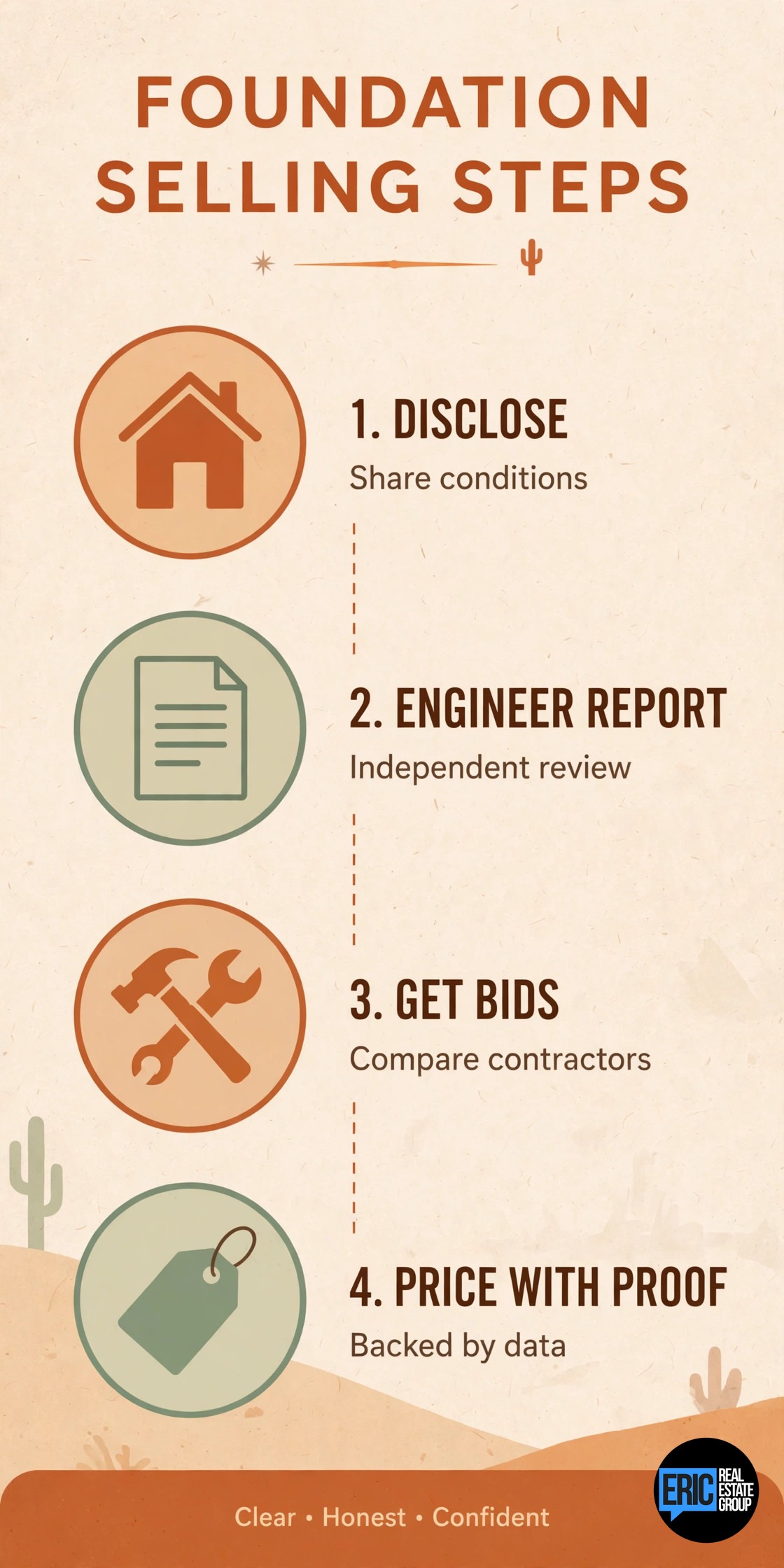
Texas law requires a seller of a single family home to deliver a Seller's Disclosure Notice under Texas Property Code Section 5.008, and foundation history is part of that honest picture. On the current form, you answer what you know about foundation condition, prior foundation repairs, and known defects. If you have had piers installed, a repair with a warranty, or an engineer look at the home, say so plainly and keep the paperwork together.
Do not guess about a home you have not lived in the same way, and do not hide what you do know. If you are not sure how to answer a line, talk with your broker or an attorney before you sign, because a disclosure problem can follow you past closing. I walk through the full form in Seller Disclosure in Texas: What You Must Reveal and What Happens If You Do Not. The safe approach is simple, disclose what you know, attach what you have, and do not promise what an engineer has not said.
As a practical step, gather these before you list:
- Prior foundation repair invoices and any transferable warranty paperwork
- Any engineer letters or reports you already have, with dates
- Photos that show the cracks or signs you are disclosing, if you have them
- A short timeline in your own words, when you first noticed movement and what was done
That packet answers buyer questions fast and builds trust, even when the news is not perfect.
Get the right report before a buyer writes the story for you
A home inspector can flag signs of movement, but a licensed professional engineer gives you the report buyers, lenders, and appraisers take most seriously. In my experience, sellers in the Valley often see an engineer evaluation and written report in a range of about $400 to $800 for a typical single family home, with higher fees for larger homes, complex access, or a more detailed letter. Treat that as a planning range to verify with the firm you call, not a quote, because every home and scope is different.
An engineer visit usually covers a floor elevation survey, a walk of the interior and exterior, and a written opinion on whether movement is active, what may be causing it, and whether repair is recommended now or monitoring is reasonable. That is different from a foundation company sales bid, which is built to sell a repair. Get the independent opinion first, then get repair bids if the engineer says repair is needed.
This is the same reason I like a fact first approach in The Pre Listing Inspection: Smart Move or Waste of Money?. With foundation questions, paying for clarity before you list is usually cheaper than losing a contract during the option period when a buyer inspection raises the same question with no answer ready.
If the engineer finds no structural concern, keep that letter with your disclosure. If repair is recommended, you now have a choice you can price.
What foundation repair can cost in expansive Valley soil
Repair costs depend on how many piers are needed, where they go, and whether interior work is involved. As a hypothetical planning example only, exterior pier work on a Valley home is often discussed by local companies in a range of about $400 to $700 per pier, and a partial repair that needs 8 to 12 piers can land in a range of about $4,000 to $10,000 or more once permits, plumbing checks, and patch work are counted. A larger job with interior piers, tunneling, or extensive plumbing repair after a lift can run well above that, into the $15,000 to $30,000 range or more in the examples sellers show me. Get written bids from licensed companies, confirm what is included, and never use a range from a blog post as a bid for your home.
Water management matters as much as piers here. Poor drainage, a plumbing leak under the slab, and big swings in soil moisture can keep moving a home after a repair. Ask the engineer about gutters, grading, and consistent watering during dry months, and fix a known leak first. Buyers care about the cause, not just the cracks.
How to price a home with foundation movement
Price from closed sales, not from a perfect condition hope price. Start with what similar homes sold for in good condition, then adjust for the report, the bids, and the buyer pool you will draw. A cash investor will discount deeper. A traditional buyer may pay more, but their lender and appraiser will want the report.
That discipline is the same one I use in How to Price Your RGV Home Right: What the Data Says. A home priced as if no movement exists will sit and invite renegotiation after inspection. A home priced with the issue named, the report attached, and the repair math visible gives a buyer a reason to write.
Consider these pricing paths:
- Repair before listing, then market the warranty and the engineer clearance if you receive one
- List as is with the report and two bids attached, priced to reflect the work the buyer will take on
- Offer a clear credit discussion through the contract, handled correctly, instead of a vague promise to fix things later
What is my McAllen home worth with a foundation note on it depends on which path you pick and how complete your proof is. The best time to sell a house in Texas does not fix a pricing gap, and how to sell your house fast in Texas with a foundation issue is almost always about proof and price working together. A good realtor McAllen TX will show you the comps, the bids, and the net for each path before you choose.
If you have movement, do not panic and do not hide it. Get the engineer report, disclose honestly, price from real numbers, and let buyers compete on a clear file. That is how these homes sell in the Valley.
Looking to buy or sell in the Rio Grande Valley?
Eric Jimenez | Eric Real Estate Group, LLC | 956-292-4500 | eric@bettercalleric.com | bettercalleric.com
Better Call Eric. Listings that sell.
Start Your Search: Rio Grande Valley Homes for Sale
Reading about the market is smart. Looking at real homes is better. Try one of these searches, then create a free account to save your favorites and get new listings emailed to you the moment they hit the market.
- Homes for sale in McAllen
- Homes for sale in Edinburg
- Search all Rio Grande Valley homes
- Find out what your home is worth
See a home you like? Call Eric Jimenez at 956-292-4500 and I will set up a showing.