


Hey, it's Eric.
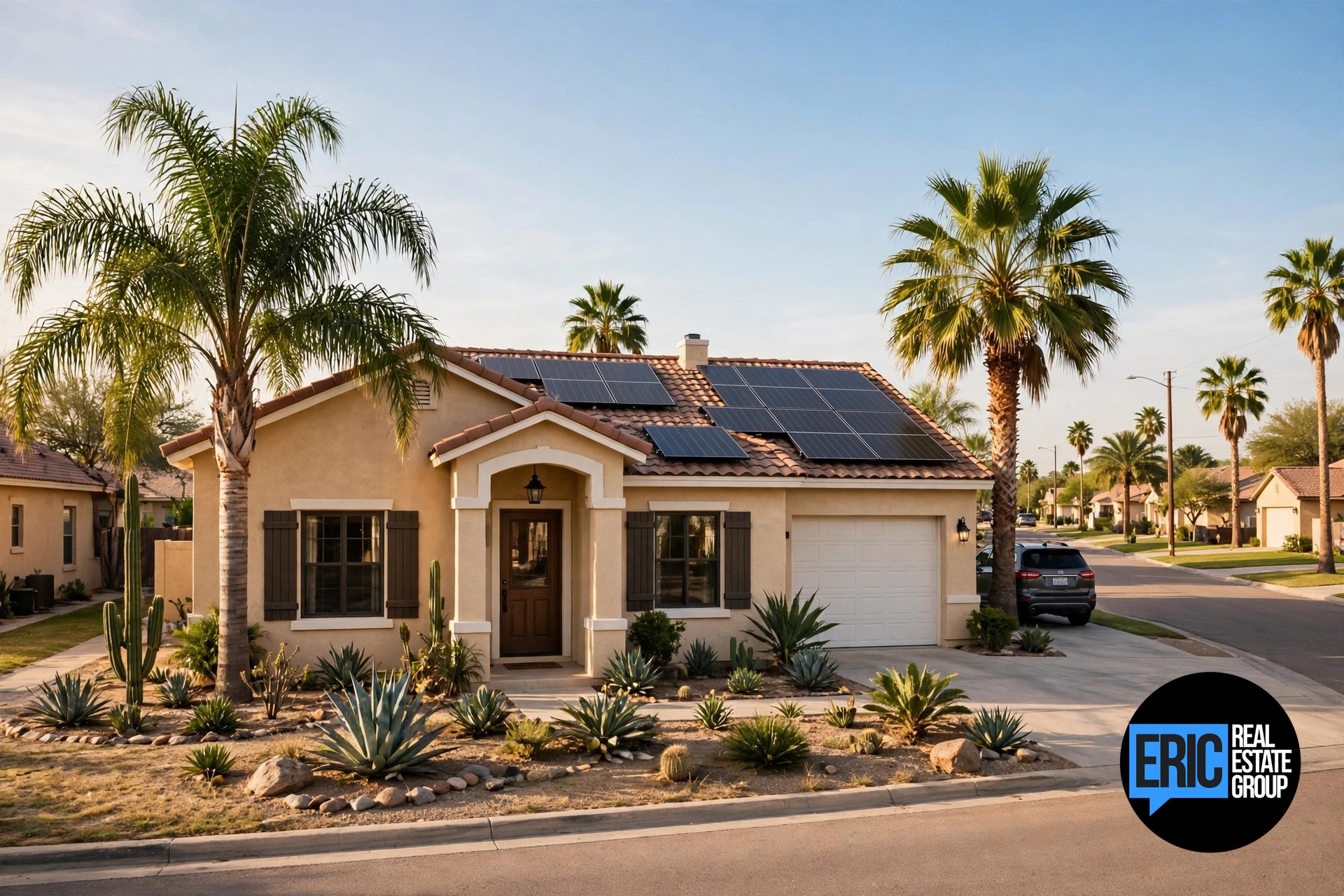
You found a home you like in McAllen, Edinburg, Mission, or Pharr, and there are solar panels on the roof. That can be a plus in South Texas, where air conditioning runs hard for much of the year. But solar panels on a home you want to buy also come with paperwork, and the paperwork decides whether those panels help you, cost you, or slow your closing down. In my experience, the buyers who handle this well ask one question first. Who actually owns the system?
This post is general information from my experience, not legal, tax, or lending advice. Your contract, the solar agreement, and your lender control how your deal works.
Solar Panels on a Home You Want to Buy: First Find Out Who Owns Them
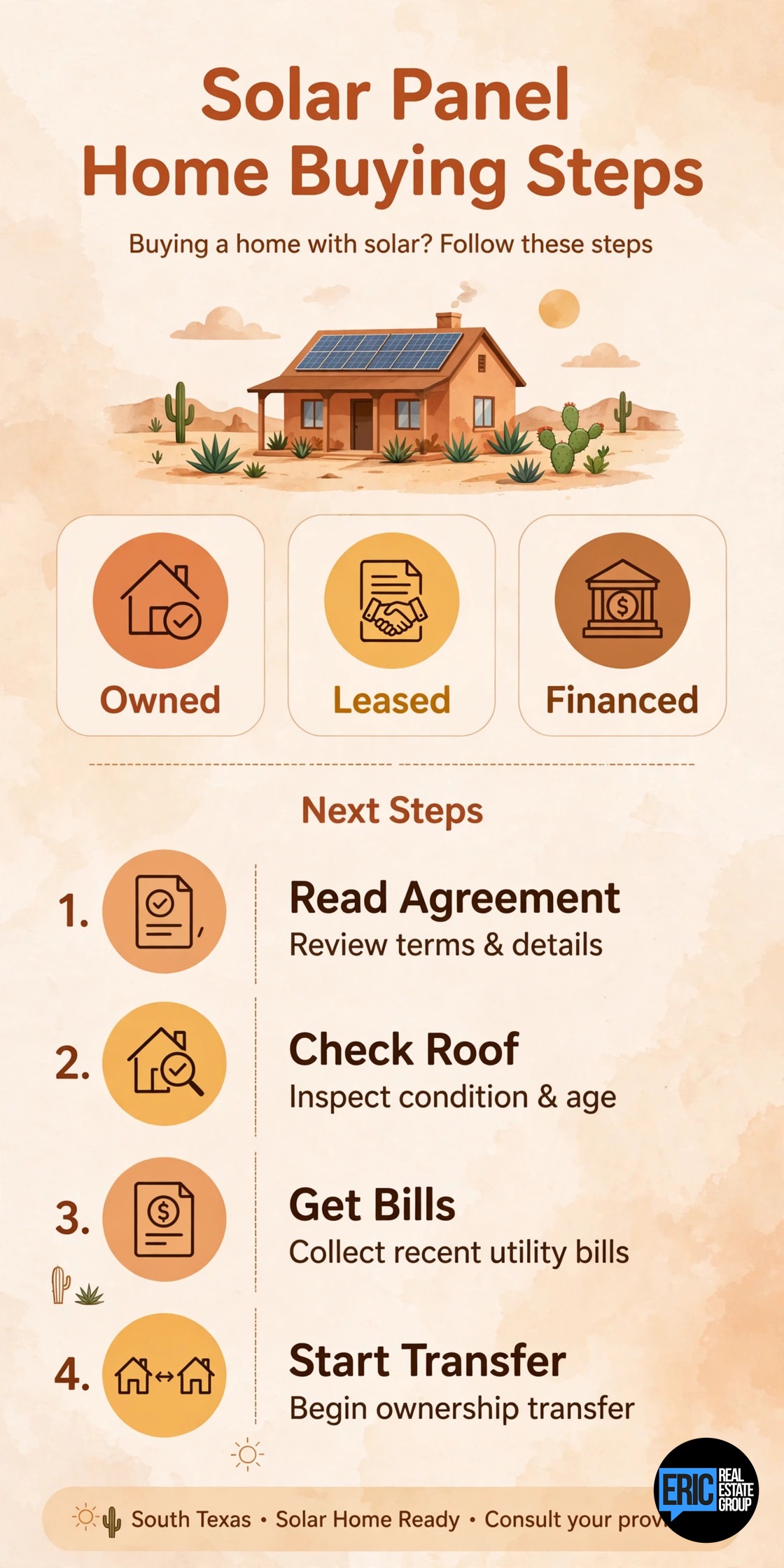
There are three common setups, and they are very different for a buyer.
- Owned outright. The seller owns the system, it conveys with the home, and there is no extra monthly solar payment waiting for you.
- Financed with a solar loan. The seller is still paying for the system. Ask the balance, the monthly payment, and whether the loan is paid off at closing or you are asked to take it over.
- Leased, or under a power purchase agreement. A solar company owns the panels, and you are usually being asked to step into the seller agreement for the rest of its term.
None of these automatically kills a deal. What causes trouble is finding out late, in week three, that a monthly payment and a long agreement come with the home. I wrote about the seller side in my guide on Selling a Home With Solar Panels in Texas: What Buyers and Appraisers Actually Care About, and the buyer side starts with that same ownership question.
What a Leased System Really Means for You
If the system is leased, read the actual agreement before your option period ends, not a summary. Look for:
- The monthly payment, and whether it can go up over time
- How many years are left on the term
- What the solar company requires to transfer the agreement to you, and how long it takes
- Whether the company will review your credit or ask you to qualify
- What happens if you want to remove the panels or reroof later
- What you owe if the agreement ends early
Also talk to your lender early. In my experience, lenders look at your total monthly obligations when they qualify you, so ask directly how a solar payment would be treated in your file. Do not guess, because the answer can affect your loan.
Transfer timing matters too. The solar company runs its own process and does not care about your closing date. Start any transfer early, in writing, so a slow form does not become a closing week problem.
The Paperwork to Ask for During Your Option Period
Your option period is when you can still investigate, negotiate, or walk away under the contract terms, so use it. Ask for:
- The full solar agreement, loan documents, or lease, with the company name and contact
- Proof the system is owned outright, or the current balance and monthly payment if it is not
- A full year of electric bills, so you see a complete South Texas summer, not just one good month
- Warranty documents for the panels and the inverter, and whether those warranties transfer to you
- The age of the system, who installed it, and any repair history
- Permit and interconnection paperwork, if the seller has it
- The age of the roof, and any roof warranty or repair records
Real bills matter more than any sales brochure. Your usage will differ from the seller usage anyway, so treat any savings claim as something to verify with documents, never as a promise.
The Roof Under the Panels Matters as Much as the Panels
In South Texas a roof takes sun, heat, wind, and storms. Ask its age and condition, because replacing a roof with panels on it raises a practical question. Who pays to take the panels off and put them back, and what does the solar agreement say about it?
Have your inspector look hard at the roof, the mounting points, and any signs of leaks. My checklist in Home Inspections in Texas: What Buyers Must Check covers the house side of the option period, and a solar roof deserves that same close look. If the roof is near the end of its life, price that in before you move forward.
Call your insurance agent early too. Tell the insurer about the panels before the policy is written, and ask how the system is covered. I cover the bigger picture in my guide on Homeowners Insurance in South Texas: Windstorm, Hail, and Hurricane Coverage Explained.
What Your Appraiser Will Care About
An appraiser values a home mainly from comparable sales, meaning recent sales of similar homes nearby. An owned system in good working order can be a real feature, but the appraiser still needs market data to support value. A leased system is not the seller asset in the same way, because the seller does not own it, so do not price it like an owned system.
As a purely hypothetical example, imagine two similar homes in Mission at the same price. One has an owned system, a newer roof, and a year of low summer bills ready for the buyer. The other has a leased system with years left, a monthly payment, and an older roof. Those are not the same deal, even if the panels look identical from the street. Run that comparison before you offer, not after you are under contract.
A Simple Buyer Checklist Before the Option Period Ends
- Confirm in writing whether the system is owned, financed, or leased
- Read the full agreement, including payment changes, term left, and transfer rules
- Get a full year of electric bills and any payoff or balance letter
- Confirm warranty transfer, roof age, and roof condition
- Ask your lender how any solar payment affects your qualification
- Start any required solar company transfer right away
- Tell your insurance agent about the system before closing
The Bottom Line for RGV Buyers
Solar panels on a home you want to buy can be a smart feature in the Valley. Just buy the facts along with the house. Confirm who owns the system, read the agreement, check the roof, verify the bills, and start any transfer early, during your option period. Then the panels stay a benefit you understood, not a headache you inherited.
If you are looking at a home with solar panels in McAllen, Edinburg, Mission, Pharr, San Juan, or Weslaco and want help reading the deal before you offer, call me.
Looking to buy or sell in the Rio Grande Valley?
Eric Jimenez | Eric Real Estate Group, LLC | 956-292-4500 | eric@bettercalleric.com | bettercalleric.com
Better Call Eric. Listings that sell.
Start Your Search: Rio Grande Valley Homes for Sale
Reading about the market is smart. Looking at real homes is better. Try one of these searches, then create a free account to save your favorites and get new listings emailed to you the moment they hit the market.
- Search all Rio Grande Valley homes
- Homes for sale in McAllen
- Homes for sale in Edinburg
- Homes for sale in Mission
See a home you like? Call Eric Jimenez at 956-292-4500 and I will set up a showing.