


Probate Sales in Texas: Selling a Home When the Owner Has Died
Hey, it's Eric.
When a homeowner dies in Texas, the house does not automatically belong to the person who has the keys. If you are a spouse, a child, or the person named in a will here in McAllen, Edinburg, Mission, Pharr, Weslaco, or San Juan, you may need probate before you can legally sell. If you are searching sell my house McAllen after a loss, start here. Probate is the court process that proves who has authority to sign, and a clean probate file is what lets a title company insure the sale.
I am not a lawyer, and this is not legal advice. Talk with a Texas probate attorney early. My job as your realtor McAllen TX is to coordinate the sale once your legal authority is clear, and to help you avoid listing before you can actually close.
Probate sales in Texas start with authority to sign
A contract signed by someone without legal authority can fail at the title company. Before we talk price, we need to know who owns the home now, who can sign a listing and a deed, and whether the court has to approve anything.
Common starting points look like this:
- There is a will naming an executor, and that will still needs to be admitted to probate
- There is no will, and the court may need to determine the heirs
- The home was owned with a spouse, a trust, or another deed structure that changes the path
- There are debts, tax questions, or disagreements among heirs that need legal answers first
Bring the death certificate, the original will if you have one, any prior deeds, and the most recent tax and insurance bills to your attorney meeting. That packet saves repeat trips and helps the attorney tell you which path fits.
This is where probate differs from the guide I wrote on Selling an Inherited Property in the Rio Grande Valley. That post covers the practical side after you already inherit, cleaning out a home, deciding to repair or sell as is, and handling family belongings. This probate post is about the step before that, proving in court who the heirs or executor are and getting the legal power to sell at all. Many families need both, first the court authority, then the inherited property sale plan.
The independent administration path in Texas
Texas often allows independent administration when the will names an independent executor, or when all heirs and beneficiaries agree to it and the court approves it. In plain English, independent administration usually means the executor can handle many steps with less day to day court supervision than a dependent administration, including paying bills, maintaining the property, and, when the will or the court order gives that power, selling real estate.
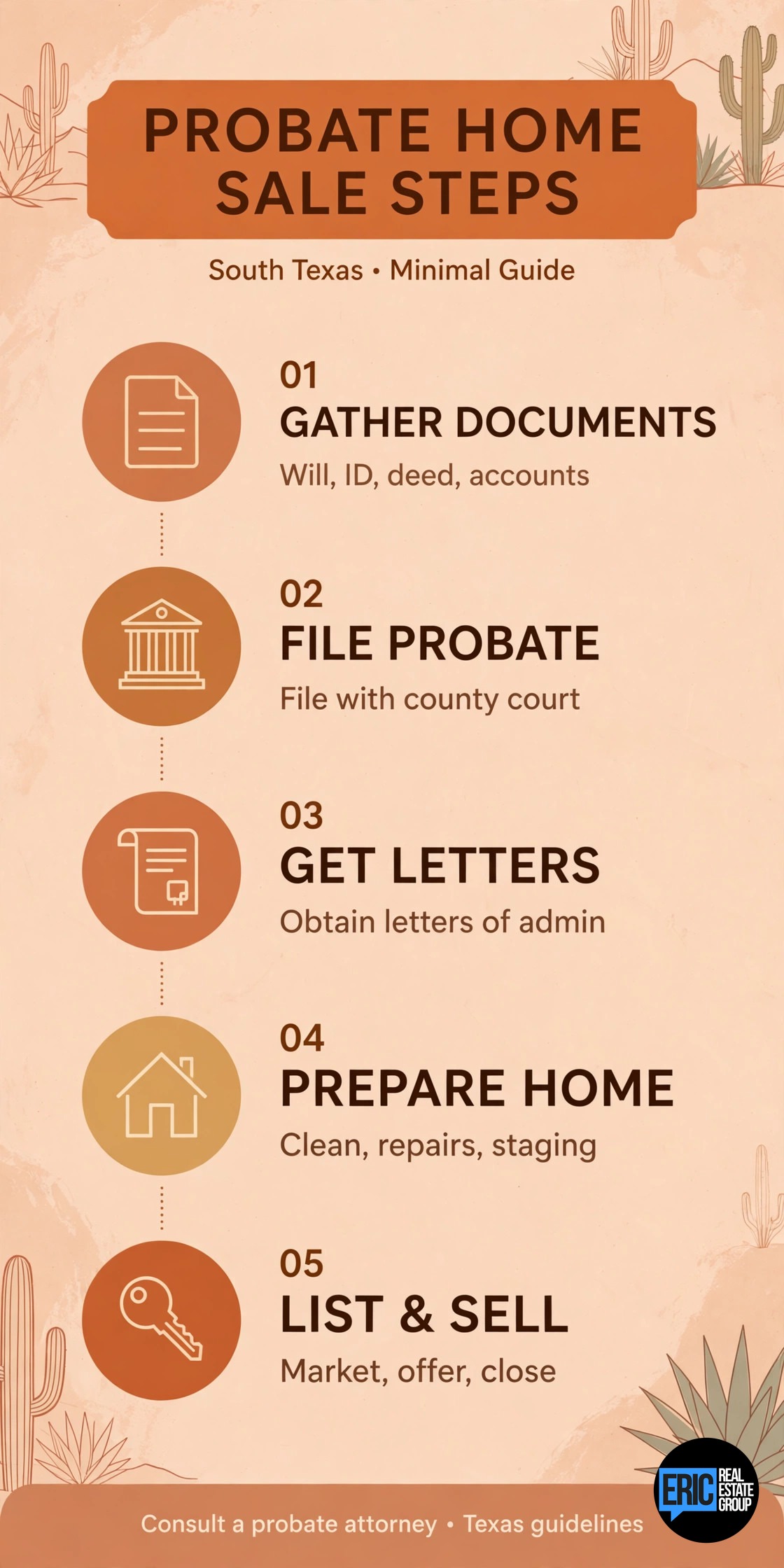
A typical independent administration path looks like this in order:
- File an application to probate the will in the county where the owner lived, for most of my clients that is Hidalgo County or Cameron County
- Attend a short court hearing where the court admits the will and appoints the executor
- Receive Letters Testamentary, the court issued document that proves the executor can act for the estate
- Give required notices to creditors and beneficiaries, and file an inventory of estate assets when required or waived in the proper way
- Keep the home insured, secure, and maintained while debts and taxes are sorted
- List and sell under the authority in the will and the court order, with the title company reviewing the probate file before closing
If there is no will, the court process can include determining heirship first, and an administrator may be appointed instead of an executor. That path usually takes longer and needs more court steps. Do not assume a family agreement at the kitchen table replaces a court order. The title company will ask for the paperwork either way.
How long a probate sale can take in the Valley
Every estate is different, so treat these as planning ranges from uncontested cases I see described by local attorneys, not promises. A simple uncontested will with independent administration can often move from filing to Letters Testamentary in about 4 to 8 weeks when the court calendar and the original will line up cleanly. Gathering documents, creditor notices, and preparing the home can add another 1 to 3 months before you are ready to list. From listing to closing, a normal financed sale often needs about 30 to 45 days after an accepted contract, plus any extra title review.
As a hypothetical planning example only, a family that files promptly, has no heir dispute, and prepares the home in parallel could be looking at about 3 to 6 months from death to a closed sale. A case with no will, missing heirs, a contested will, or a dependent administration can run 6 to 12 months or longer. Even if you cannot list yet, secure the home, forward the mail, and keep the AC running to fight Valley humidity.
Ask your attorney these timing questions at the first meeting:
- Which administration type fits this estate, and why
- Can the home be sold before the estate is fully closed, and what document proves that power
- What creditor notices and waiting periods apply before a sale is safe
- What will the title company need from the probate file at closing
Getting the home ready while the case moves
You do not have to sit still while the court works. With your attorney's guidance, change locks if keys are scattered, photograph every room before anything is removed, keep personal property decisions in writing among heirs, and do not throw away tax, mortgage, or insurance records.
Disclosure still matters. An estate seller completes the Seller's Disclosure Notice for what the executor or heirs actually know, and should not guess about a home they never lived in. I explain that duty in Seller Disclosure in Texas: What You Must Reveal and What Happens If You Do Not. Price from real Valley comps and real bids, and get a clear picture of closing costs before heirs agree on a price, which is why I point families to What Sellers Pay at Closing in Texas: A Clear Breakdown.
What is my McAllen home worth as an estate sale depends on condition, timing, and how clean the probate file is for a buyer and a lender. The best time to sell a house in Texas will not fix a missing Letters Testamentary problem, and how to sell your house fast in Texas in a probate case is mostly about starting the court file early and preparing the home in parallel.
Losing someone is hard enough. Do not add a failed contract because the authority to sign was never finished. Get the probate path clear, get your court proof in hand, prepare the home with a written family plan, and then list with confidence that you can close.
Looking to buy or sell in the Rio Grande Valley?
Eric Jimenez | Eric Real Estate Group, LLC | 956-292-4500 | eric@bettercalleric.com | bettercalleric.com
Better Call Eric. Listings that sell.
Start Your Search: Rio Grande Valley Homes for Sale
Reading about the market is smart. Looking at real homes is better. Try one of these searches, then create a free account to save your favorites and get new listings emailed to you the moment they hit the market.
- Homes for sale in McAllen
- Homes for sale in Edinburg
- Search all Rio Grande Valley homes
- Find out what your home is worth
See a home you like? Call Eric Jimenez at 956-292-4500 and I will set up a showing.