


Hey, it's Eric.
If you are looking at a home outside city limits in rural Hidalgo County, septic systems and well water are not side details. They are the house. A pretty kitchen does not matter if the septic system is failing or the well water is not safe to drink. This guide covers what septic systems and well water in rural Hidalgo County buyers must test, what those tests cost as planning ranges, and the county and lender requirements that can delay closing if you find them late.
Why Rural Hidalgo County Homes Are Different
Inside McAllen, Edinburg, Mission, Pharr, Weslaco, and San Juan, most homes connect to city water and city sewer. Outside those lines, in rural parts of Hidalgo County, many homes use a private well for water and an on site sewage facility, which is the formal name for a septic system, for waste.
That means you are buying two small utility systems you will own and repair. Neither shows up well in photos. Test and verify during your option period, not after closing.
If you are also considering raw land, I cover the bigger rural checklist in Buying Land in the Rio Grande Valley: What to Know Before You Build. This post goes deeper on the two systems that cause the most closing delays for existing rural homes.
Septic Systems: What to Inspect and What It Costs
A standard home inspection does not fully evaluate a septic system. In my experience, you need a separate septic inspection by a licensed installer, a site evaluator, or a septic company that works in Hidalgo County.
A good septic inspection should check:
- Location, size, and type of tank and drainfield, and whether records match what is in the ground
- Tank condition, baffles, lids, and whether the tank needs pumping to complete the inspection
- Signs of failure, such as standing water over the drainfield, sewage odor, slow drains, or lush green strips in dry weather
- Distance from the well, property lines, and water features, which matters for code and for lender review
- Permit history and whether additions to the home, such as an extra bedroom or a casita, were ever permitted against the system capacity
Planning cost ranges, labeled as examples from my experience, not quotes. Get a written quote for the specific property before you order.
- Septic inspection: about $350 to $600 in many Valley examples
- Pumping the tank so the inspector can see inside: about $300 to $500 in many examples, depending on tank size and access
- Dye or load testing if the inspector recommends it: often included or a smaller added fee, confirm in advance
If the system fails, repairs can run into the thousands and a full replacement can run well into five figures depending on soil and system type. Get the report first, then get bids during the option period.
That is why I push buyers to order the septic inspection in the first days of the option period, the same urgency I stress in Home Inspections in Texas: What Buyers Must Check.
Well Water: What to Test and What It Costs
A private well is not city water. No city lab is testing it for you every month. As the buyer, you order the test, and your lender may require a specific panel.
At a minimum, in my experience, buyers should test for:
- Total coliform and E. coli bacteria, the basic potability screen most lenders look for first
- Nitrates and nitrites, which matter for health and are common lender items
- Lead and other items your lender or loan program specifies
- pH, hardness, iron, and total dissolved solids, which affect taste, staining, plumbing, and treatment choices, even when they are not lender pass or fail items
Also check well yield and equipment. Run water during the inspection, check pressure, pump age, pressure tank, and any filtration system.
Planning cost ranges, again labeled as examples, not quotes:
- Basic bacteria water test: about $75 to $150 in many examples
- Fuller lender panel with bacteria, nitrates, and lead: about $250 to $450 in many examples, depending on the lab and turnaround
- Rush lab turnaround: extra cost in some cases, and still not instant, which is why timing matters
Use a qualified lab and follow its sampling rules exactly. A sample taken wrong or delivered late can be rejected, and resampling costs you days.
County and Lender Requirements That Can Delay Closing
This is where rural deals get stuck.
On the county and state side, septic systems are on site sewage facilities regulated under Texas Commission on Environmental Quality rules, with permitting handled locally through Hidalgo County. If there is no permit on file, or the system does not match the home today, you may need county review or corrective work before a lender or title company will close. This is not legal advice. Verify the property records early.
On the lender side, FHA, VA, and USDA loans in particular have clear expectations in my experience. The water must be potable, the septic system must be functioning, and the appraiser and underwriter must be able to document both. A failed bacteria test, a missing water test, or a septic letter that says the system could not be fully inspected can pause underwriting until you treat, repair, retest, and redocument. Conventional loans can be more flexible on paperwork, but no smart lender ignores a failed system.
Common delay patterns I see:
- Water sample taken late, lab result fails, well must be shocked or treated, then you wait to resample and wait again for results
- Septic inspector cannot locate the tank or lids, digging or pumping is needed, and the report slips by days
- Bedroom count in the listing exceeds what the septic permit supports, and the appraiser flags it
- Well and septic are too close together on a small lot, or setbacks are questioned, and more documentation is required
- Seller has no records at all, so every answer has to be created from scratch during a short option period
Protect yourself with time. Ask for records before you write the offer if you can, order both tests on day one under contract, and talk to your lender before the option period ends about exactly which water panel and which septic letter they require. Do not assume a general inspection report satisfies them.
A related step buyers skip is the survey, which helps confirm where the well, septic tank, and drainfield sit on the lot. I explain that piece in What Is a Survey in a Texas Home Sale and Why Buyers Should Care.
Your Option Period Checklist for Septic and Well
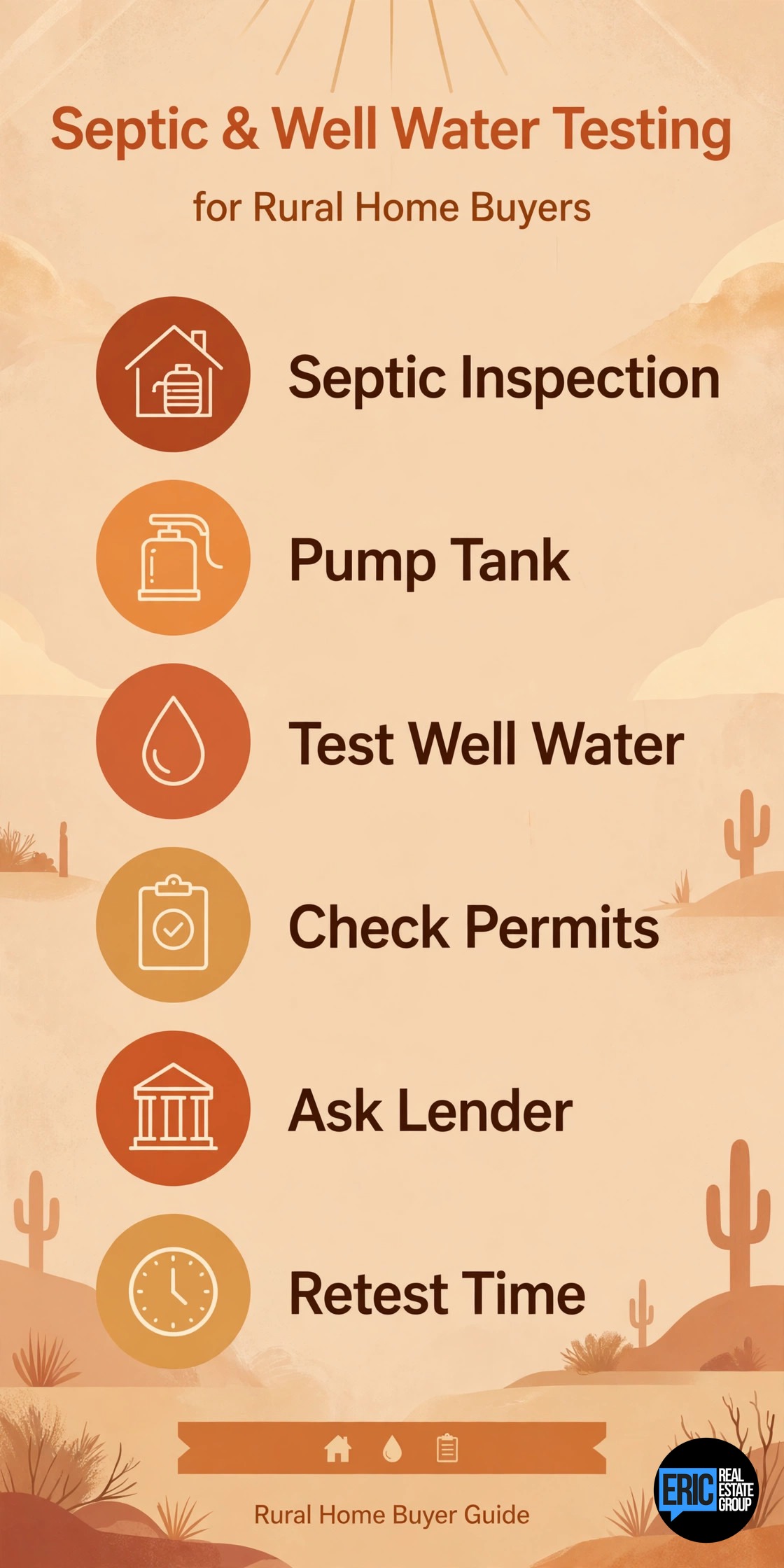
- Ask the seller for septic permit, install date, last pumping date, well log, pump service records, and any prior water tests
- Confirm with your lender, in writing, the exact water test panel and septic documentation they require for your loan type
- Order the septic inspection and the well water test on the first business day under contract
- Budget for pumping if the inspector needs the tank opened, and confirm who pays for it in the contract conversation
- Leave time for one failure and one retest in your closing plan, especially on FHA, VA, or USDA loans
- If either system fails, get written repair bids and a realistic timeline before your option period expires, then decide with real numbers
A rural home can be a great buy, with more land and privacy. Just test the septic, test the well, verify the permits, and give your lender clean paperwork early. That is how a rural closing stays on schedule.
Looking to buy or sell in the Rio Grande Valley?
Eric Jimenez | Eric Real Estate Group, LLC | 956-292-4500 | eric@bettercalleric.com | bettercalleric.com
Better Call Eric. Listings that sell.
Start Your Search: Rio Grande Valley Homes for Sale
Reading about the market is smart. Looking at real homes is better. Try one of these searches, then create a free account to save your favorites and get new listings emailed to you the moment they hit the market.
- Homes for sale in McAllen
- Homes for sale in Edinburg
- Homes for sale in Weslaco
- Search all Rio Grande Valley homes
See a home you like? Call Eric Jimenez at 956-292-4500 and I will set up a showing.