


Hey, it's Eric.
If you are buying a home in the Rio Grande Valley, you will hear the words title insurance in Texas a lot near the end of the process. Most buyers I work with in McAllen, Edinburg, Mission, Pharr, Weslaco, and San Juan nod along at the title company, then ask me later what they actually paid for. That is fair. You cannot see it or touch it like a roof or an AC, but it protects one of the biggest purchases you will ever make.
In my experience, once buyers understand what the title search does and what an owner's policy covers, they feel a lot better about that line item at closing. Let me walk through it in plain English.
What Title Insurance in Texas Actually Does
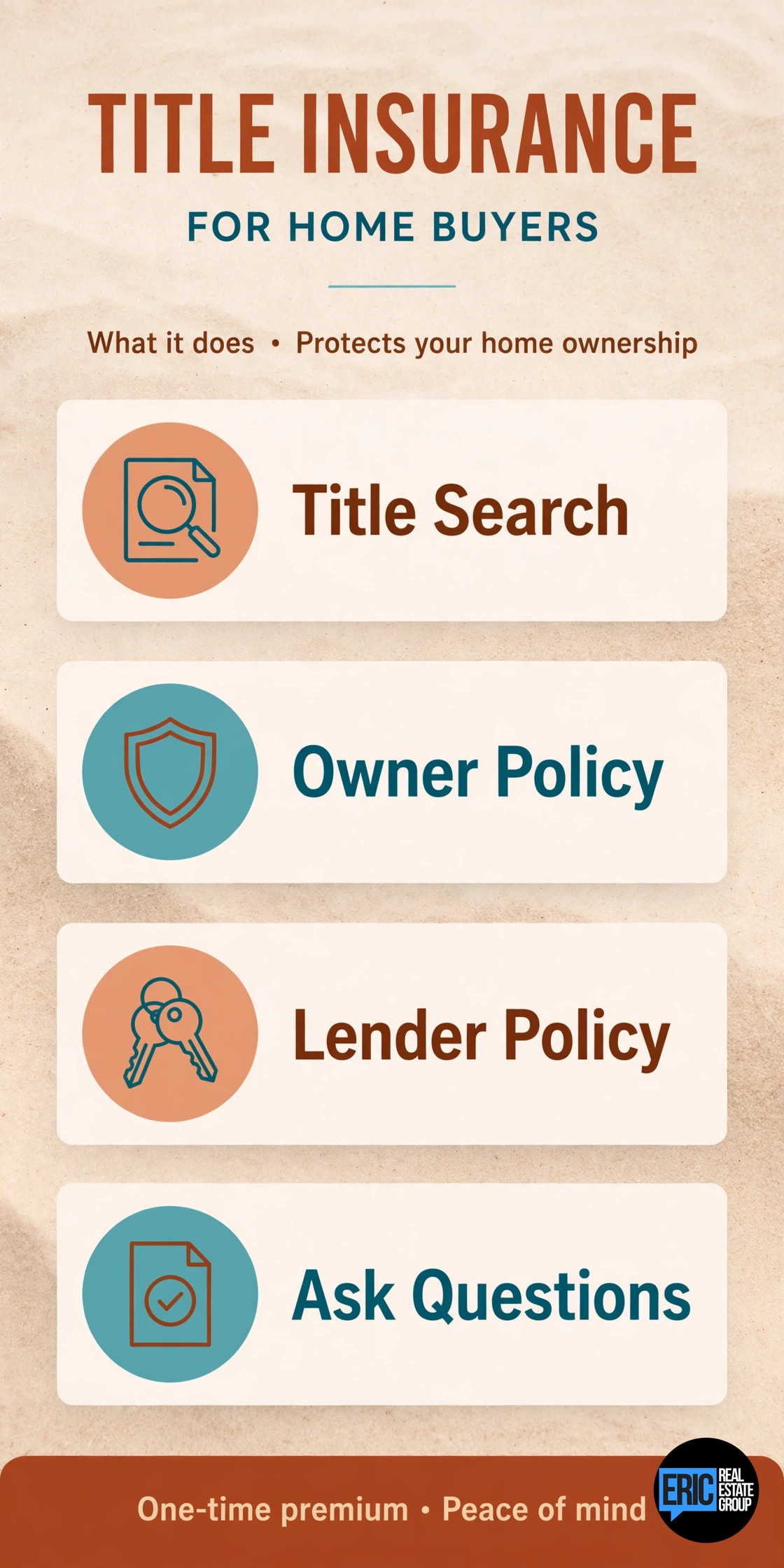
Title is the legal record of who owns a property and what claims exist against it. Before you close, the title company searches public records for that property. They look at past deeds, mortgages, liens, judgments, and tax records that could affect your ownership.
Title insurance in Texas protects you if something from the past shows up after you close that the search did not catch. As a hypothetical example only, imagine a prior lien filed incorrectly, an old deed with an error in a name, or a missing heir from a sale years ago who later claims an interest in the property. Those are the kinds of hidden risks a policy is built to address, subject to the exact terms and exceptions in your policy.
This is different from homeowners insurance. Homeowners insurance looks forward and covers future events like a storm or a fire. Title insurance looks backward and covers problems tied to the property's history before you owned it.
If you want to see where this fits in your cash to close, review my breakdown on What Are Closing Costs in Texas? A Buyer's Line by Line Breakdown so you can spot the title charges alongside the other closing costs.
Owner's Policy vs Lender's Policy: Why There Are Two
Buyers are often surprised to learn there are two different policies discussed at closing.
- The lender's policy protects the lender's interest, up to the loan amount. If you use a mortgage, your lender will almost always require this policy.
- The owner's policy protects your interest as the buyer. This is the policy that protects you and your family.
The lender's policy does not protect you personally. If a title problem surfaced and only the lender was covered, the lender could be made whole while your down payment was still at risk. That is why the owner's policy matters for buyers, not just for the bank.
In my experience in the Valley, who pays for the owner's policy is spelled out in your contract and is negotiable. In many Texas deals the seller provides the owner's policy as part of the contract terms, and the buyer pays for the lender's policy if there is a loan, but every contract is different. Read your specific contract and ask the title company to explain each charge. Do not assume based on what a friend paid on a different deal.
What the Title Search Looks For in the RGV
In South Texas this search matters because many properties have long family histories, inherited ownership, or land that was divided over time. The title company is checking for issues such as:
- Unpaid property taxes or liens against the property
- Old mortgages that were paid but never properly released in the records
- Judgments or liens tied to a prior owner
- Errors in prior deeds, legal descriptions, or filings
- Gaps in the chain of ownership or questions about who had the right to sell
- Easements and restrictions that affect how you can use the property
Most searches come back clean or with items the title company can clear before closing. Sometimes they find something that needs a signature, a payoff, or a correction first. That is the system working. It is better to find and fix a problem before you own it than after.
This step connects closely to the money you put down at the start. Read my guide on What Is Earnest Money and Option Money in Texas? to understand how the title company also holds earnest money and why that neutral third party role matters.
What Title Insurance Usually Does Not Cover
No policy covers everything, and I want you to hear that clearly. An owner's policy comes with exceptions, and your commitment for title insurance, which you should receive before closing, lists what is and is not covered for your specific property.
Pay close attention to:
- Standard exceptions in the policy, including matters a correct survey would show
- Restrictions, HOA rules, and easements already of record
- Issues you knew about before closing and did not disclose to the title company
- Problems created after you take ownership
That is why the survey, the HOA documents, and the seller's disclosure still matter. Title insurance is one layer of protection. It does not replace reading your documents and asking questions before your option period ends. If anything in the title commitment looks confusing, ask the title officer or your own attorney to explain it line by line before you sign.
One Payment at Closing
One part buyers usually like: title insurance is a one time premium paid at closing, not a monthly bill. In my experience, the owner's policy stays in effect for as long as you or your heirs hold an interest in the property, under the terms of that policy. There is no yearly renewal like homeowners insurance.
The exact amount for your deal will be shown on your closing statement based on your purchase price and your contract. I will not quote a number here because yours depends on your specific transaction. What I will do is sit with you and the title company and go over each title charge before you sign.
To see where the title step falls in the full sequence, read The First Time Buyer's Timeline: From Pre-Approval to Keys in the RGV.
Questions to Ask Your Title Company Before Closing
- Can you walk me through the title commitment and each exception in plain English
- Is there anything in the search that could delay closing or affect how I use the property
- Which policy am I receiving, and what coverage amount is shown for my deal
- What do I need to bring to closing, and how will I wire funds safely
- How do I protect myself from wire fraud when I send my closing funds
That last question matters a lot. Always verify wiring instructions by calling the title company at a number you already trust, never by trusting an email alone that asks you to wire money. A two minute verification call is one of the smartest moves a buyer makes in the whole transaction.
The Bottom Line for Valley Buyers
Title insurance in Texas protects your ownership against hidden problems from a property's past. The search works to clear issues before closing, the lender's policy protects the lender, and the owner's policy protects you. Read the commitment, ask about the exceptions, confirm who pays for what in your contract, and keep your policy documents after closing with your deed.
If you are under contract now or getting ready to make an offer in McAllen, Edinburg, Mission, Pharr, Weslaco, or anywhere in the Valley, call me. We will go through your contract and your title paperwork together so there are no surprises on closing day.
Looking to buy or sell in the Rio Grande Valley?
Eric Jimenez | Eric Real Estate Group, LLC | 956-292-4500 | eric@bettercalleric.com | bettercalleric.com
Better Call Eric. Listings that sell.
Start Your Search: Rio Grande Valley Homes for Sale
Reading about the market is smart. Looking at real homes is better. Try one of these searches, then create a free account to save your favorites and get new listings emailed to you the moment they hit the market.
- Search all Rio Grande Valley homes
- Homes for sale in McAllen
- Homes for sale in Edinburg
- Homes for sale in Pharr
See a home you like? Call Eric Jimenez at 956-292-4500 and I will set up a showing.