



Selling a Rural RGV Property With a Septic System: Prep, Tests, and Disclosure
Hey, it's Eric.
If you are thinking sell my house McAllen but your place sits outside city limits in rural Hidalgo County, with a septic system instead of city sewer, your sale works a little different. Buyers love the space. Their lender, though, will ask questions about that system late in the deal if you do not answer them early. Prep it, test it, and disclose it right, and it becomes a documented feature instead of a closing week surprise.
I am a realtor McAllen TX who sells rural homes and land across the Valley. In my experience, the septic sales that go smooth are the ones where the seller gathered the permit records, pumping receipts, and maintenance paperwork before the first showing, not after an appraiser flagged a problem.
Selling a rural property with a septic system in Texas: how to sell your house fast without a late lender surprise
In Texas a septic system is called an on site sewage facility, or OSSF. TCEQ sets the statewide rules, and Hidalgo County or the local authorized agent handles permits and records. Many Valley rural homes use an aerobic treatment unit with spray heads. Those systems need regular care, and Texas requires them to be checked by a maintenance provider about every four months.
If your property also has acreage, the marketing points in Selling Land or a Lot in the Rio Grande Valley: Pricing and Marketing It Right apply too.
Prep before you list: records, pumping, and yard basics
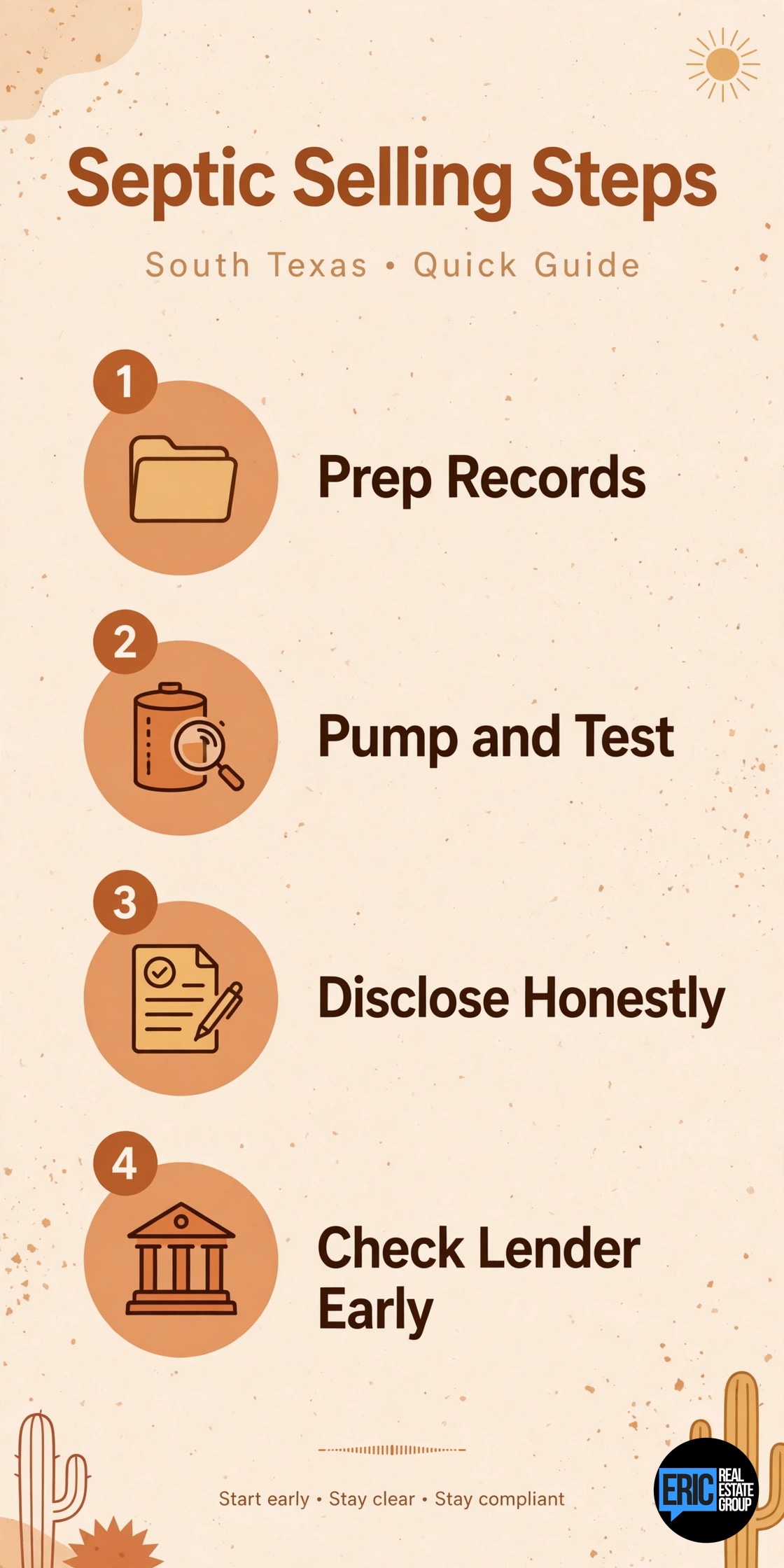
Start a septic folder before photos. Put these in it:
- The OSSF permit and any county records showing the system type, size, and location
- Pumping receipts and the date of the last pump out
- For an aerobic system, the current maintenance contract and recent inspection reports from your provider
- Repair invoices, permit paperwork for any fix, and notes on alarms, backups, or spray field problems
Then do the visible prep. Pump the tank if it is due and keep the receipt. Clear brush around lids and spray heads so an inspector can open the tank and walk the field. Fix running toilets, because excess water makes a system look stressed during a test. Keep vehicles off the drain field or spray area, and do not park or build over it.
Tests and inspection cost: what a full septic inspection checks
Texas does not have a statewide rule that forces a septic inspection just because you sell. Buyers and lenders ask for one anyway, so in my experience it pays to get your own full real estate inspection before you list, or be ready for the buyer to order one in the option period.
Published Texas price guides put a basic visual check at about $150 to $250, and a full real estate septic inspection at about $350 to $650. Pumping, dye tests, or camera work can add to that. Those are guide ranges to budget from, not a quote for your property, so confirm the price with a licensed local inspector before you schedule.
A full inspection usually opens the tank and checks:
- Sludge and scum levels, baffles, and any effluent filter
- Tank condition, lids, and risers, and whether the tank holds water correctly
- The pump, aerator, alarm, and electrical parts on an aerobic unit
- Chlorine and spray heads on an aerobic system, and whether spray is even and working
- The drain field or spray area for ponding, wet soil, odor, or sewage surfacing
- Water run through the house plumbing to see how the system handles a normal load
If the inspection finds a problem, get a written repair estimate before you price. A known repair is negotiable. An unknown failure in the last week can kill the loan. That is the other side of what I cover for buyers in Septic Systems and Well Water in Rural Hidalgo County: What Buyers Must Test.
Disclosure specifics: what Texas sellers must reveal about septic
Disclosure is not optional, and guessing is risky. Under Texas Property Code 5.008, most sellers of a single family home must give the buyer a Seller's Disclosure Notice. Septic system is one of the items on that form. You mark the system, and you answer what you know about its condition, defects in plumbing, sewers, and septic, and any flooding, water penetration, or standing water problems tied to the yard and field.
Disclose, in writing, what you actually know:
- System type, age if you know it, and location, plus whether it is permitted as far as you know
- Last pumping date, maintenance provider, and whether an aerobic maintenance contract is current
- Any backups, overflows, alarms, odors, ponding over the field, repairs, or replacement parts
- Any failed inspection, county notice, or repair you chose not to do
Do not write that a system is fine if you have never had it checked and you know it has symptoms. Write what you know, attach the records you have, and let the inspection speak for the rest. I walk through the broader duty and the risk of leaving things out in Seller Disclosure in Texas: What You Must Reveal and What Happens If You Do Not. For septic, the rule is simple. If you lived with it, and you know it, put it on the form.
Hypothetical example: a seller outside Edinburg knows the alarm sounded twice and a tech replaced a pump. Disclosed with the paid invoice attached, that pump is proof of service. Left off the form, the same repair becomes a trust problem after closing.
Buyer lender requirements that surface late
This is where sellers get surprised. The contract is signed, then the lender or appraiser adds a septic condition in the final stretch.
Watch for these late requirements:
- FHA, VA, and USDA appraisers look for visible signs of failure, like standing water in the field, sewage odor, or evidence of a backup. If they flag a concern, a licensed septic inspection, and repairs, can be required before closing
- Many lenders ask for a satisfactory septic report even when no state rule requires one, and some want proof the system meets local health and permit standards and any required setback distances
- Aerobic systems can trigger a request for a current maintenance contract and recent service reports, and a lapsed contract can take time to reinstate
- If there is also a private well, lenders can require a water test, and results are only accepted inside a set window, so a slow closing can mean retesting
- Repairs found late may need a county permit, a licensed installer, and a reinspection, none of which happen overnight in Hidalgo County
Your defense is timing. Share the folder early, ask the buyer lender in the first days what septic proof they will require, and keep your maintenance contract current through closing.
Pricing and negotiating when the system needs work
A documented system supports your price. A system with no records gets priced as if it needs replacement, even when it does not. If a repair is needed, you have three clean choices. Fix it before listing and show the invoice. Credit the buyer an amount tied to a written estimate, if the lender allows it. Or price it in and disclose it up front.
Hiding a known problem does not work. Inspectors open tanks and appraisers walk fields. The honest folder and a test done early are what keep a rural sale together.
Looking to buy or sell in the Rio Grande Valley?
Eric Jimenez | Eric Real Estate Group, LLC | 956-292-4500 | eric@bettercalleric.com | bettercalleric.com
Better Call Eric. Listings that sell.
Start Your Search: Rio Grande Valley Homes for Sale
Reading about the market is smart. Looking at real homes is better. Try one of these searches, then create a free account to save your favorites and get new listings emailed to you the moment they hit the market.
- Homes for sale in McAllen
- Homes for sale in Weslaco
- Search all Rio Grande Valley homes
- Find out what your home is worth
See a home you like? Call Eric Jimenez at 956-292-4500 and I will set up a showing.